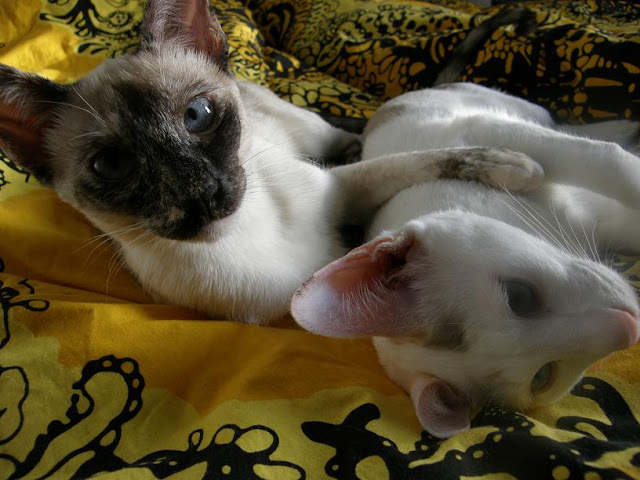
Investigating the history of the Siamese Lipstick domain
Lipstick history is unusually tangible. Tinted lips appear in ancient Egyptian art, rouge flourished in nineteenth-century Europe, and modern liquid formats emerged with twentieth-century cosmetics. A domain name can echo that long commercial history, yet a name alone says little about whether it belongs to a cosmetics seller, a fashion writer or a cat-themed publication.
The evidence for the Siamese Lipstick domain is exceptionally sparse. The supplied page presents one generic “Click here to proceed” link and identifies no business, product, organisation, publication or subject. It establishes a route to another destination, but offers no reliable evidence of who operated it, what it advertised or when the project began.
A credible history must therefore separate observation from inference, recovered records from assumptions, and the history of cosmetics from the history of this particular address. The empty landing page becomes evidence of how the domain presents itself now, not a licence to invent an earlier identity.
What the landing page actually establishes
The visible page contains a single instruction, “Click here to proceed”, followed by an outbound hyperlink. Nothing else identifies an owner, product, Australian presence, publication category or editorial purpose. Any company history, product range or connection to a cat breed would go beyond the information actually displayed.
Several explanations fit those facts. The page may be a deliberately minimal gateway, the surviving entrance to a larger site that has moved, a traffic-routing page or a transitional placeholder. The wording alone cannot distinguish a launch teaser from a technical remnant, and the final destination must be checked before assigning any of them a history.
The generic wording also carries implications. It describes movement rather than content, so it cannot support claims about beauty, publishing or a feline theme. It could equally lead to a shop, a magazine, a membership service or an unrelated website. Even a destination with established branding would need separate attribution before it could become part of this domain’s history.
Tracing the redirect through archived time
An investigator should first preserve the exact URL, access date, visible wording, HTTP status codes and complete redirect chain. A guide to following a redirect link offers a practical way to inspect that journey without treating the click itself as proof of the destination’s identity or purpose.
The Internet Archive’s Wayback Machine can then show whether earlier versions displayed products, editorial pages, photographs or navigation menus. A missing capture does not prove that a richer site never existed, since robots instructions, redesigns and selective archiving all affect coverage. Trove and the National Library’s Australian Web Archive may also preserve Australian references that a commercial archive overlooked.
Domain registration records provide a separate timeline. RDAP and WHOIS-style records can reveal creation and update dates, registrar changes and name servers, although privacy services may conceal ownership details. A .com extension says nothing about national origin. An Australian address, Australian-language content or a local payment provider would support a local connection; overseas hosting would not rule one out.
Interpreting the name without inventing a story
Siamese carries several layers of meaning. It is a familiar name for a cat breed, a historical reference connected with Siam, now Thailand, and a word that can suggest something sharply defined, elegant or slightly theatrical. Lipstick, meanwhile, may indicate a cosmetic, a particular shade, a writer’s subject or a metaphorical image. Joining the two words creates a memorable phrase without proving a product category.
The name invites several historical hypotheses: a named lipstick shade, an independent beauty label, a feline-themed creative project or a magazine concerned with colour and style. Each would leave a different trail in catalogues, trademarks, archived pages and contemporary advertisements. Without recovered examples, treating any one hypothesis as fact would give the name more authority than the evidence permits.
The present Siamese Lipstick website is consequently a starting point for checking those records, not a brand archive in itself. A meaningful history would need dated pages showing the original purpose, products or subjects, followed by evidence of how the site changed. The current redirect can confirm only that an outbound gateway was visible when checked.
Why a nearly empty page fits web design history
The landing page also belongs to a recognisable phase of web design. Simple HTML documents, under-construction notices and single-link gateways preceded today’s elaborate storefronts and content systems. If a cosmetics brand outgrew a rudimentary site, its old domain might now function mainly as a passage to a newer shop or platform, with most of the original evidence removed from view.
The principle of when less is more helps explain the visual economy of minimal pages, but minimalism cannot date this one. A newly designed teaser can resemble an artefact from the early internet almost perfectly, making archived versions and hosting evidence more reliable than appearance alone.
Design history can still narrow the possibilities. Page structure, image file names, script paths, contact details and former navigation should be examined in any capture. A preserved domain may also have been rebuilt after a sale or hiatus. The distinction matters: continuity of the address does not necessarily mean continuity of the business, the product line or the editorial voice.
The Australian market and cosmetic clues
The Australian market supplies useful comparative clues. Australian shoppers encounter cosmetics through Sephora’s local stores and website, Priceline’s discount network, Chemist Warehouse and department-store beauty counters such as those at Myer and David Jones. If Siamese Lipstick was ever sold here, archived product pages, stockist lists and Australian coverage might reveal it. Those channels provide context, not an assumed connection.
Local buying customs make comparisons more specific. Australians commonly expect prices in Australian dollars with GST treatment clear, plus visible delivery, returns and privacy information. For an imported lipstick, the pack and seller information can matter: ingredients, warnings, batch details and an AUST L number or equivalent local listing can help distinguish a commercial supply route from a purely informational page. A redirect offers none of that.
City and seasonal conditions can refine the search. Brisbane’s humid summer raises practical questions about how a formula wears, while Melbourne’s cooler, drier climate changes product testing conditions. In Sydney, Christmas gifting and Boxing Day sales create periods when a small colour label might appear in gift guides and online beauty round-ups. Trove’s newspaper holdings can also place a phrase, shade or advertising campaign within Australian print culture. These are directions for research, not evidence that the domain belonged to an Australian cosmetics company.
Reconstructing a defensible history
The strongest account will keep a dated evidence log. Every claim should point to an archived page, registration record, product listing, advertisement or contemporary mention, with access dates retained. Screenshots should be stored with the original URL and relevant headers or images, allowing another researcher to repeat the check rather than inherit an unverified narrative.
The sources can then be read in sequence: the earliest capture, subsequent redesigns, shifts in products or editorial subjects, Australian press mentions and the present redirect. Where accounts conflict, the disagreement should remain visible and the stronger source identified. If no early capture is found, the accurate description is that the site’s early history remains unverified, not that it necessarily began recently.
For the Siamese Lipstick domain, that measured account may be less dramatic than an invented brand story, but it is more durable. The landing page proves that an outbound gateway existed at the time checked; archived pages and registration data may establish where it led and when the domain entered the web. Its name provides a compelling lead, while the surviving evidence sets the boundary on what can honestly be claimed.